
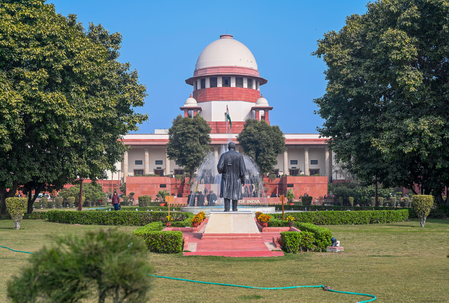
New Delhi, Feb 18 (IANS) The Supreme Court on Wednesday declined to entertain a plea seeking a stay on the suit pending before a civil court in Ajmer regarding the alleged “unauthorised occupation of the Shankat Mochan Mahadev Temple by the Ajmer Sharif Dargah”.
A bench headed by Chief Justice of India (CJI) Surya Kant refused to interfere at this stage, observing that the top court’s earlier interim order, passed in the batch of petitions challenging the constitutional validity of the Places of Worship (Special Provisions) Act, 1991, was binding on all courts.
In its order dated December 12, 2024, the Supreme Court directed that no fresh suits be registered under the contentious law — which prohibits filing a lawsuit to reclaim a place of worship or to seek a change in its character from what prevailed on August 15, 1947 — across the country, and that in pending matters, no final or effective interim orders shall be passed until further orders.
The latest application was filed by a member of the Dervish community, followers of Khwaja Moinuddin Chishti, who apprehended that the Ajmer civil court might pass a survey order in the pending suit relating to the Ajmer Sharif Dargah.
The plea contended that, despite the apex court’s direction prohibiting the entertainment of fresh suits under the Places of Worship Act and restraining the passing of effective interim or final orders in pending matters, the Ajmer court had issued notice in the dispute. It sought a direction for the strict enforcement of the apex court’s interim order and for restraining the Ajmer court from issuing any interim or final orders.
During the hearing, the CJI-led Bench said: “See, there is already an order by us. That order we passed is binding on one and all courts. If any court passes any order, we will examine it. If any defiance has been committed, whether the order passed is in the teeth of our orders, we will examine, and consequence will follow.”
The Bench, also comprising Justices Joymalaya Bagchi and Vipul M. Pancholi, further observed that no order had yet been passed by the Ajmer court.
“Now, a suit may have been instituted. You are saying an order is going to be passed. It has not been passed, right? Let the order be passed, and then you come to us. Right now, till an order is passed, how can we intervene?” the apex court remarked.
“This court has directed that suits may be instituted, but they may not be proceeded with now. A suit has been merely instituted,” it added.
The CJI Surya Kant-led Bench also declined to entertain the plea on technical grounds, observing that the petitioner was not a party before the Ajmer court and had not impleaded the original parties to the suit in the application filed before the Supreme Court. The apex court is already seized of a clutch of pleas challenging the validity of the Places of Worship Act, and yet, the Centre has yet to file its counter-affidavit clarifying its stand on the constitutional validity of the law.
–IANS
pds/vd