
Washington, Feb 19 (IANS) The newly announced India-US trade framework is a “positive development” that could unlock significant export gains for both countries, deepen supply chain integration, and inject fresh momentum into the broader strategic partnership, a former US Commerce Department official said.
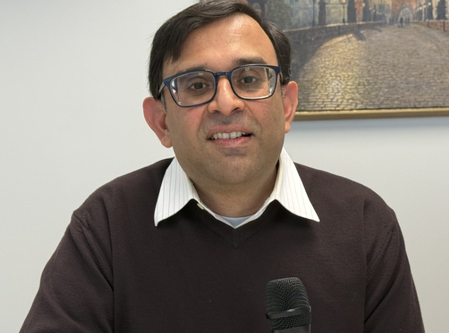
Atman Trivedi, Partner at DGA-Albright Stonebridge Group, who was Senior Director for Policy in Global Markets at the US Commerce Department and played a central role in creating the US-India Strategic and Commercial Dialogue, said the agreement opens new space for businesses on both sides.
“It’s a positive development. The trade deals should unlock significant export gains for both countries, help small and medium-sized entrepreneurs in both markets,” Trivedi told IANS in an interview.
He said the framework opens key sectors on both sides. “For the US side, it opens up key Indian areas, all industrial goods, and a number of other sectors as well. For India, it presents the opportunity to make good on the Prime Minister’s manufacturing goals, help make an India where US exports should increase.”
He added: “We’ll see more Indian products coming into the US, which is already India’s largest export market. That should be a boost for making in India for the world.”
For the US, the deal lowers long-standing tariff barriers in the Indian market. “Historically, the average applied tariff rates have been high in India. Those reduced barriers should make it easier for US businesses of all varieties to sell into India’s market, the largest in the world, of course, by population,” he said.
From India’s perspective, Trivedi described it as “a tremendous opportunity.” He pointed to expanded market access “for textiles, for critical items like gems and jewellery, for leather.” He said it was “a big opportunity from an Indian perspective to sell more into what is already India’s largest global market for India’s products.”
On trade-offs, he said India made “a significant give” by reducing tariffs, in some cases “going to zero on industrial goods.”
The US, he said, agreed “to go from 50 per cent tariffs very high down to 18 per cent.”
That shift gives India a competitive edge. “Countries like Vietnam, Malaysia, Indonesia, Bangladesh, and Pakistan all face higher tariffs on their exports to the US than India does. So that’s a significant advantage going forward,” he said.
He argued that opening India’s market would help integrate it more deeply into global supply chains and “reduce its dependencies on other countries that have a more adversarial relationship with India.”
The agreement also sets ambitious purchase targets, including India’s commitment to buy goods and services worth $500 billion. Trivedi said energy and defence would be central.
“I think India will purchase more energy, more defence acquisitions, given our countries have a common strategic view of the Indo-Pacific region,” Trivedi said.
He also flagged “civilian aircraft… things like Boeing planes” and industrial segments.
But he cautioned that the target is steep. As of 2024, India imported over $ 87 billion in US goods. And so to get to 500 billion in five years, that’s going to require a significant effort.”
“Whether we can get to 500 billion in 5 years remains to be seen,” he said.
Beyond tariffs, Trivedi said non-tariff barriers remain a concern for US firms in India, including “compulsory licensing requirements or conformity assessment rules, standards challenges… localisation requirements.”
On the Indian side, the friction lies more in “services, mobility, and issues of workers having skilled workers having greater access to the US economy.”
On H-1B visas, he noted the political sensitivity. “Even legal immigration and skilled immigration have become an issue. I don’t know whether we’ll see that tackled in the bilateral trade discussions. But it’s an issue… in the broader relationship. Certainly.”
Asked why negotiations took so long, Trivedi cited longstanding trade differences and geopolitical disruptions, including the May conflict between India and Pakistan, which he said “took us off track.”
Looking ahead, he expects renewed momentum. “I expect to see more momentum in the relationship. I think this is a positive step,” he said.
He predicted spillover into “technology cooperation,” “defence cooperation,” and “energy cooperation,” and said there was “opportunity to accelerate on, on areas that had slowed down because these trade differences consumed so much of the agenda.”
The United States and India have steadily expanded their economic and strategic engagement over the past two decades, with bilateral trade reaching record levels in recent years. Trade has often been a friction point, even as defence and technology ties deepened.
Both governments have described each other as key partners in the Indo-Pacific. The latest trade framework is being viewed as an effort to align economic cooperation more closely with their strategic convergence.
–IANS
lkj/sd/