
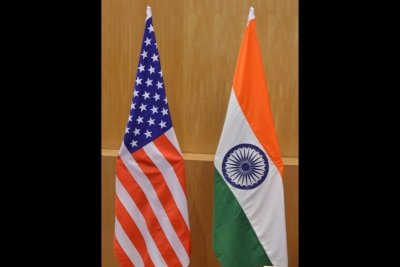
New Delhi, Feb 19 (IANS) India’s recent interim trade agreement with the United States, which resulted in a reduction in US tariffs, is being increasingly seen worldwide as reflecting New Delhi’s strategic autonomy in taking decisions that are in national interest.
“India’s response, which is seemingly rooted in a deliberate policy of strategic autonomy, reveals a pragmatic approach that prioritises national interest without surrender, as many pundits had suggested,” according to an article in South Africa’s Sunday Independent.
External Affairs Minister S Jaishankar, at the recent Munich Security Conference on February 14, also stated that India remains “very much emboldened to strategic autonomy because it’s very much a part of its history and evolution.”
Responding to questions about whether the US trade deal compelled a shift away from Russian oil, Jaishankar stressed that energy decisions are driven by “availability, costs, risks”, and the best interests of Indian oil companies, not political pressure, the article points out.
This underscores that any moderation in imports (Russian share has declined to below 25 per cent in early 2026, with Iranian flows already negligible) stems from pragmatic assessments, not external pressure, the article written by Phapano Phasha states.
Jaishankar’s remarks directly countered US assertions (from Trump and Secretary of State Marco Rubio) of a firm commitment to end Russian purchases, highlighting India’s insistence on independent-minded choices that “may not necessarily agree on everything” with partners, the article observes.
The US tariffs on Indian goods will drop from rates as high as 50 per cent (including punitive layers) to 18 per cent, slightly more favourable than those on competitors like Pakistan (19 per cent) and Vietnam (20 per cent).
This will ease the burden on key export sectors such as textiles, pharmaceuticals and electronics, stabilising supply chains and protecting jobs amid global volatility.
Experts are also of the view that most Trump-era deals remain frameworks with uncertain timelines and legal questions over presidential authority, and without congressional approval, thus countries like India retain implementation flexibility.
This US framework followed swiftly after India’s landmark free trade agreement with the European Union, finalised on January 27. The article also points out that India’s sequencing of first securing a free trade agreement with the EU, diminished US leverage during negotiations, exemplifying strategic autonomy through diversified partnerships.
India has moderated Russian imports under sanctions and market realities, while eyeing Venezuelan heavy crude as a US-encouraged alternative. Yet no full halt on Russian or Iranian ties has been confirmed, and enduring military-economic links with Moscow persist, the article points out.
This selective diversification clearly aligns with the tapestry of India’s national interest: ensuring an affordable, reliable supply of oil for 1.4 billion people while hedging risks.
“By balancing US concessions with EU diversification and pragmatic energy choices, New Delhi advances national interest without perceived ideological surrender. In a multipolar world, this model of resilient, uncoerced engagement offers valuable lessons for the Global South, the article observes,” the article observes.
–IANS
sps/na