
Washington, Feb 19 (IANS) An International Monetary Fund (IMF) staff team will travel to Islamabad from February 25 to hold discussions on Pakistan’s economic reform programme under its Extended Fund Facility (EFF), the Fund said on Thursday.
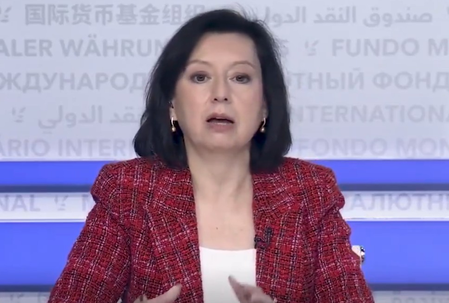
“We do have a staff team that is expected to visit Pakistan starting February 25th for discussions on the third review under the EFF and the second review under the RSF,” IMF Communications Director Julie Kozack told reporters at a news conference here.
The discussions will focus on the third review under the EFF and the second review under the Resilience and Sustainability Facility (RSF), both of which are linked to policy benchmarks and reform commitments, she said.
Kozack said the programme had helped stabilise Pakistan’s economy. “Pakistan’s policy efforts under the EFF have helped stabilize the economy and rebuild confidence.”
She pointed to improvements in key macroeconomic indicators. “First fiscal performance has been strong. Pakistan currently has a primary fiscal surplus of 1.3% of GDP in FY 25, which was in line with program targets.”
On inflation and the external account, she added: “Headline inflation has been relatively contained, and Pakistan posted its first current account surplus in 14 years in FY 2025.”
The IMF also referred to governance reforms. The government governance and corruption diagnostic assessment report was recently published. And it includes proposals for reforms, including simplifying tax policy design, leveling the playing field for public procurement, and improving the asset declaration transparency.”
The IMF staff visit is expected to assess progress on fiscal consolidation, inflation management, external stability, and structural reforms under the programme framework.
Pakistan has faced recurring balance-of-payments pressures and elevated inflation in recent years, prompting reliance on IMF-supported programmes to restore macroeconomic stability.
The Extended Fund Facility provides longer-term financial assistance tied to structural reforms, while periodic reviews determine disbursements based on performance against agreed targets.
–IANS
lkj/dan