
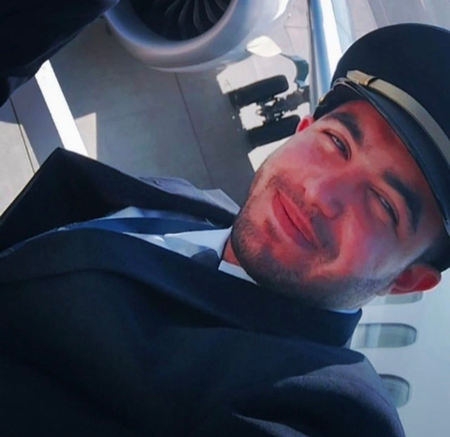
Abu Dhabi, Oct 3 (IANS) Hamam Al Hamami, the co-pilot of the Dubai-Tel Aviv flydubai flight, attacked Indian pilot Captain Smit Machchhar with a crash axe during the flight in what United Arab Emirates prosecutors have confirmed as a “terrorist attack”, according to reports on Saturday.
The UAE prosecutors said Al Hamami attempted to take control of the aircraft after attacking Captain Machchhar inside the cockpit.
According to news agency WAM, Al Shamsi said the “co-pilot began executing his plan during the flight, attacking the captain inside the flight deck using a crash axe and attempting to take control of the aircraft.”
The confirmation provides further details about the incident involving the flydubai aircraft, in which Captain Machchhar was attacked while the flight was in the air.
The Indian pilot was subsequently hailed as a “hero” for his actions during the emergency and his efforts to prevent the situation from escalating further.
Under international aviation regulations, a crash axe is required to be carried on every commercial passenger aircraft. The equipment is kept inside the cockpit and is intended to be used by flight crew in emergencies, including situations arising from an aircraft crash.
Crash axes were previously stored in the main passenger cabin on commercial aircraft. However, their location was changed to the cockpit following the September 11, 2001, terrorist attacks in the United States, amid increased aviation security concerns.
The investigation into the incident remains underway, with authorities examining the co-pilot’s background.
The flydubai flight was heading from Dubai to Israel’s Tel Aviv on September 30 when the co-pilot tried to sabotage the aircraft and stabbed Captain Smit Machchhar, who was trying to prevent him from doing so.
At the time, the Boeing 737, cruising at about 34,000 feet, began dropping at roughly 23,000 feet per minute before reaching about 15,600 feet. However, Machchhar fought the co-pilot, resisted him, and opened the cockpit door so that passengers and crew members could overpower him. The flight made an emergency landing in Saudi Arabia’s Tabuk with the help of two other pilots who were on the flight at that time.
Meanwhile, UAE Attorney-General Hamad Saif Al Shamsi has ordered the formation of an investigation team to probe the incident, including any possible connection to terrorist activity or intent.
The team, comprising specialised members of the Public Prosecution, will investigate the circumstances and causes of the incident, according to the statement released by the UAE’s Ministry of Foreign Affairs.
The UAE appreciated Saudi Arabian authorities for their cooperation and handling of the incident.
Hamami had reportedly been barred from flying in his country Oman over concerns that he had adopted extremist views, according to media reports.
According to reports, Al Hamami spent much of his time outside Oman, particularly in Syria, where he was allegedly influenced by extremist ideas before subsequently travelling to the UAE.
Al Hamami had worked for flydubai for only about eight months, CNN reported. A now-deleted LinkedIn profile bearing the name Hamam Al Hammami reportedly stated that he had worked with Oman Air for seven years and left the airline in February 2025.
He subsequently joined Royal Air Maroc in June 2025 and left the airline in January this year before taking up employment with flydubai, according to reports.
The deleted profile reportedly made two posts within around nine hours of the flydubai incident, both of which were terror-related. One of the posts reportedly contained a series of clips filmed inside the cockpits of a Boeing 737 Max aircraft, with the person recording the footage zooming in on an aircraft belonging to Israeli airline El Al.
The video reportedly ended with an image of Ayman al-Zawahiri, the al-Qaeda leader who succeeded Osama Bin Laden, along with a photograph of Humam Khalil Abu-Mulal al-Balawi, who killed nine people in a 2009 suicide bombing targeting US personnel.
Another post reportedly featured an AI-generated image depicting Islam’s three holiest sites in Mecca, Medina and Jerusalem.
According to CNN, a poem in the background referred to rejecting humiliation, not fearing death and defending one’s dignity.
A separate CNN report said Al Hamami’s now-deleted X account portrayed him as “deeply religious and misogynistic”. Other media reports have also cited a former colleague describing him as a religious extremist, although investigations into his motives and background remain ongoing.
–IANS
sd/rad