
Mumbai, July 16 (IANS) In a move that highlights the tightrope walk between rural populism and aggressive corporate reform, the Maharashtra government has announced a massive Rs 48,000-crore write-off of legacy agricultural electricity arrears.
While the decision offers immediate relief to 44 lakh farmers across the state, it has triggered intense debate among economists and power sector analysts.
The waiver stands in sharp contrast to the state’s parallel structural reforms: a historic demerger of the state power utility, Mahavitaran (MSEDCL), and a highly anticipated Initial Public Offering (IPO) designed to raise Rs 10,000 crore.
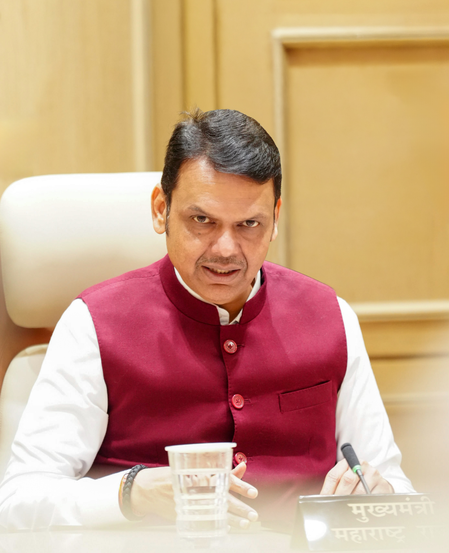
Chief Minister Devendra Fadnavis strongly defended the decision, framing it as a necessary step to unshackle farmers from past liabilities.
“While farmers currently do not receive active bills for using these 7.5 HP motor pumps to irrigate their lands, older unpaid dues have remained registered under their names, blocking them from securing any new power connections. Our (Maharashtra) government has decided to write off Rs 48,000 crore in old electricity bills. The farmer’s slate must be wiped clean so they can write a new history of progress,” he remarked.
The primary friction point for policy analysts is why such a massive waiver was deemed necessary immediately after the restructuring of Mahavitaran.
The state government recently approved a clean split of Mahavitaran into two distinct entities comprising a Commercial Unit: handling highly profitable industrial, commercial, and urban residential consumers and MSEB Solar Agro Power Limited (MSAPL), a dedicated entity to supply power to agricultural consumers, designed to transition entirely to low-cost solar energy under the Mukhyamantri Saur Krushi Vahini Yojana 2.0.
Under the initial demerger blueprint, the state had already agreed to absorb Rs 32,679 crore of agricultural arrears through 15-year long-term bonds.
By expanding this safety net to a sweeping Rs 48,000-crore direct waiver, the state has significantly broadened its fiscal liabilities.
However, the power sector experts say that if the solar transition is designed to make agricultural supply self-sustaining, retroactively deploying massive cash payouts drains capital that could have otherwise been directly invested into solar infrastructure.
From a corporate finance perspective, however, the Rs 48,000-crore waiver is less about agricultural policy and more about balance-sheet warfare. Agricultural arrears have historically been the single largest red flag for public distribution companies (DISCOMs) in India.
Institutional investors view these unpaid bills as “bad debt” that is politically impossible to collect.
By systematically purging this toxic debt from the utility’s books and absorbing it directly into the state’s accounts, the state government is effectively grooming Mahavitaran’s non-agricultural commercial arm for public markets.
The result is a utility with improved book value and clean balance sheets, predictable cash flows driven by industrial and commercial tariffs and zero agricultural baggage, making the upcoming IPO highly lucrative for institutional and retail investors alike.
The state government plans to use the Rs 10,000 crore raised from the public listing to fund critical modernisation projects, including smart metering and grid digitisation.
While the state government sources have asserted that the financial burden of the waiver “would not be transferred to the public”, economists say this is a mathematical fallacy.
The Rs 48,000 crore will not vanish; it will flow directly from Maharashtra’s taxpayer-funded budget into Mahavitaran’s accounts to square the ledger.
When combined with an existing annual power subsidy of Rs 25,000 crore and a parallel farm loan waiver scheme, Maharashtra’s fiscal deficit is facing unprecedented pressure.
Every rupee diverted to cover historical defaults is a rupee that cannot be deployed for long-term capital expenditure in public education, healthcare, or state-wide transport infrastructure.
Beyond the immediate fiscal strain, power sector analysts warn of a deeper, systemic risk, the entrenchment of moral hazard in rural utility consumption.
Even as MSEB Solar Agro Power Limited (MSAPL) rolls out daytime solar power, establishing a culture of zero financial accountability makes it incredibly difficult for the new solar entity to enforce metering, collect basic tariffs, or build long-term operational discipline.
Ultimately, the Rs 48,000-crore power bill waiver is a masterstroke in corporate restructuring — it effectively isolates and sanitises Mahavitaran’s books, clearing the runway for a blockbuster IPO.
However, as a matter of public policy, it represents a steep trade-off.
It uses state Treasury funds to bail out a systemic collection failure, precisely at the moment a structural, solar-powered division was created to solve the crisis permanently.
Whether this “clean slate” leads to genuine agricultural progress or simply paves the way for the next cycle of debt remains to be seen.
(Sanjay Jog can be contacted at sanjay.j@ians.in)
–IANS
sj/khz