
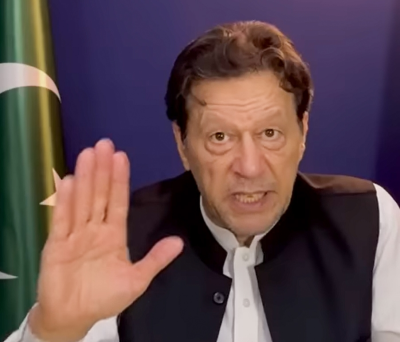
New Delhi, Nov 17 (IANS) Pakistan’s former Prime Minister and well-known cricket all-rounder Imran Khan’s health condition in prolonged incarceration, remaining largely out of public eyes, has been a reason for global concern which has increased following his counsel having reportedly shared his appeal to top judges for urgent medical treatment for himself and his wife, Bushra Bibi.
The 74-year-old leader of Pakistan Tehreek-e-Insaf (PTI) has been in jail since August 2023, following convictions that his party claims are “politically motivated”.
While in prison, Khan was sentenced to 14 years in jail in January 2025 for land corruption and his wife handed a seven-year term in the same case, according to reports.
International concern over his treatment has intensified following the publication of an open letter, reportedly conveyed by his lawyer Salman Safdar, in which Khan appealed directly to Pakistan’s senior judges for urgent medical treatment for himself and his wife.
In the letter, Khan warned that deteriorating health and extended isolation had left him fearing that he “may not return alive”.
He alleged that court orders requiring specialist medical treatment had not been fully implemented and claimed doctors had warned him of risks, including brain haemorrhage and cardiac arrest.
Bushra Bibi has separately sought transfer to a specialist hospital, citing rapidly deteriorating eyesight.
Court filings by her legal team claim she suffers from severe vision problems and requires urgent ophthalmological treatment.
Her lawyers have also alleged poor sanitary conditions inside prison accommodation and delays in specialist medical access.
In August this year, Sunil Gavaskar, Kapil Dev, and Dilip Vengsarkar joined 21 former international cricket captains in an appeal to Pakistan Prime Minister Shehbaz Sharif, urging proper medical treatment for Imran Khan.
The move, said to have been initiated by Australia’s former captain Greg Chappell, also included England’s Michael Atherton.
Other signatories reportedly included Allan Border, Ian Chappell, Clive Lloyd, David Gower, and Steve Waugh, among others.
Meanwhile, Islamabad has pushed back strongly against claims of mistreatment.
Pakistan Information Minister Attaullah Tarar and other officials have said that Khan has received hundreds of visits from family members, lawyers and doctors since his imprisonment.
Also, several reports have alleged coordinated online smear campaigns and bot-driven attacks targeting British and American lawmakers who raised the issue.
Around August, there were claims of coordinated online attacks on foreign politicians voicing concerns over Khan’s health in detention.
Islamabad’s “pro-establishment social media” accounts were alleged to have been targeting lawmakers and public figures who shared support for the jailed Pakistani leader.
Back home, Khan’s three sisters have been organising country-wide demonstrations against the incarceration, also claiming that they were mostly kept from visiting the former Prime Minister.
They were detained in September under a public safety legislation for restraining them from mobilising people.
Reports from Islamabad this month said that the two younger sisters were released recently.
Imran Khan-led PTI said these campaigns are intended to discourage international scrutiny, while Pakistani officials reject suggestions of state-sponsored harassment.
His supporters cite Pakistani history as grounds for concern, where the most prominent political leader to die in custody was another former Prime Minister, Zulfikar Ali Bhutto.
He was executed in Rawalpindi Jail in 1979 after being convicted in a murder case.
Deep controversy surrounds the process, and Pakistan’s Supreme Court later concluded that Bhutto had not received a fair trial.
However, Khan’s imprisonment is separate, and stems from multiple cases.
Initially jailed over the Toshakhana gifts case, the former cricketer later received sentences connected to the Al-Qadir Trust GBP 190 million corruption case.
Additional proceedings linked to the May 9, 2023, unrest on his arrest, and other charges, also remain active.
Bushra Bibi is serving a sentence connected to the Al‑Qadir Trust case and has also faced proceedings related to Toshakhana allegations.
Both deny wrongdoing and said the cases are designed to exclude PTI from political life, but the Pakistan government rejects these allegations.
All this while, a wider crisis is unfolding in Khyber Pakhtunkhwa, Pakistan’s predominantly Pashtun northwestern province and PTI’s traditional political stronghold.
It has witnessed a resurgence of violence, claimed by Islamabad as carried out by Tehreek-e-Taliban Pakistan (TTP)-linked groups.
Being among Pakistan’s most violence-affected regions, the region witnesses frequent firefights, especially in former tribal districts and southern areas bordering Afghanistan.
Islamabad has responded with intensified offensives and clampdowns, with the region being ruled by the PTI-led provincial administration, politically opposed to the federal government.
As the PTI Chief remains imprisoned, the debate increasingly extends beyond Pakistan’s domestic politics with questions about judicial independence, prisoners’ rights, access to medical care, and democratic accountability becoming central to a growing international discussion.
–IANS
jb/khz