
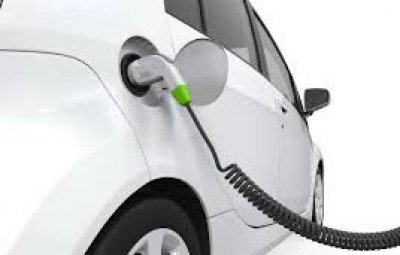
New Delhi, Feb 24 (IANS) The Supreme Court on Tuesday agreed to examine a public interest litigation (PIL) seeking effective implementation of the Centre’s electric vehicle (EV) charging infrastructure guidelines and to prevent arbitrary denial of NOCs by housing societies.
Issuing notice on a plea filed by a Greater Noida-based resident, a bench of Chief Justice of India (CJI) Surya Kant and Justice Joymalya Bagchi sought responses from the Union of India, the State of Uttar Pradesh, the Nirala Estate housing society in Greater Noida, and its property management agency Cushman & Wakefield Property Management Services India Pvt Ltd.
The petition has been filed under Article 32 of the Constitution by Rachit Katyal, who contended that despite clear Central government guidelines promoting EV adoption, housing societies continue to obstruct the installation of private charging infrastructure.
According to the plea, the petitioner is the owner and resident of a flat in Greater Noida (West) Nirala Estate Phase-3 and had purchased an electric vehicle in furtherance of “the increasing need for sustainable and eco-friendly transportation and national EV policies”.
The plea stated that the petitioner planned the installation of a certified private EV charger at his own expense through authorised professionals, and sought a No Objection Certificate (NOC) from the housing society and management agency on May 26, 2025.
However, despite repeated reminders and submission of government guidelines, no decision was taken.
The petition, filed through advocate Sriram Parakkat, contended that arbitrary refusal by housing societies to grant NOCs for installation of EV chargers in designated parking spaces defeats national policy on clean mobility and violates residents’ fundamental rights under Articles 14 and 21.
“The principal obstacle to EV adoption at the residential level is the unreasonable refusal or delay by housing societies in granting permission for installation of EV chargers in allotted parking spaces,” it added.
The petitioner alleged that although the society has nearly 4,000 flats and around 56 electric vehicles, only two low-capacity charging points of 7 kW and 3 kW exist, which are “grossly insufficient and contrary to national EV policy”.
Referring to the Union Ministry of Power’s notification dated September 17, 2024, the plea said the consolidated “Guidelines for Installation and Operation of Electric Vehicle Charging Infrastructure-2024” expressly permit residents of group housing societies to install private EV chargers in their designated parking spaces, subject to safety norms.
“The said EV Guidelines expressly promote installation of private EV chargers in group housing societies and provide for electricity supply through existing meters or sub-meters, leaving no scope for arbitrary denial by housing societies,” the petition stated.
“Denial of permission by housing societies frustrates national policy, violates principles of reasonableness and non-arbitrariness, and undermines public interest in sustainable development,” it added.
Relying on policies adopted in states such as Maharashtra, where statutory circulars mandate issuance of NOCs within stipulated timelines, the petitioner argued that the absence of enforceable directions in Uttar Pradesh has resulted in regulatory uncertainty and inconsistent implementation of Central guidelines. Stating that the cause of action is “continuous and subsisting”, the petition seeks directions to ensure uniform and effective implementation of the 2024 EV charging infrastructure guidelines and to prevent arbitrary denial of NOCs by housing societies.
–IANS
pds/vd