
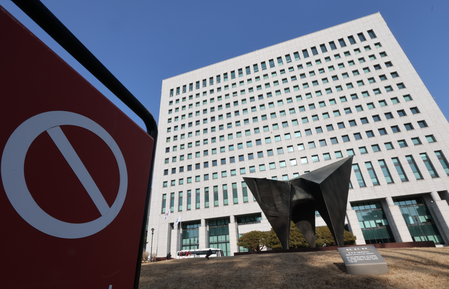
Seoul, Feb 24 (IANS) The South Korean government has revised bills on the establishment of two bodies set to replace the prosecution following criticism they were designed to be little different from the current prosecution service, a task force said Tuesday.
The so-called serious crimes investigation agency and the indictment agency are set to be established in October under a government reorganisation bill that passed the National Assembly last September, Yonhap News Agency reported.
The two bodies will replace the prosecution office and take on its investigative and indictment powers, respectively, as part of South Korean President Lee Jae Myung administration’s drive to address longstanding criticism that the prosecution has abused its exclusive powers by carrying out politically motivated investigations.
Under the initial bills unveiled last month, the investigation agency was tasked with investigating nine major types of crimes,
The corresponding revised bill, however, reduces the number to six, excluding crimes involving public officials, elections and large-scale disasters, to reflect concerns that the scope was too large and could overlap with the powers of other agencies, according to the prosecution reform task force under the Prime Minister’s Office.
The revised bill calls for the new agency to open investigations into crimes involving corruption, economic offences, the defence industry, narcotics, cyber activities, and insurrections and foreign aggression.
It also simplifies the organisational chart to remove the distinction between prosecutors and general professional investigators proposed in the original bill.
Under the new bill, all investigators will be classified as investigators but ranked from Grades 1 to 9 based on their expertise and roles.
No change was made to the title of the agency’s chief, which will remain “prosecutor general.”
The revised bill for the indictment agency, meanwhile, adds the dismissal of a prosecutor as a disciplinary action, whereas originally a prosecutor could only be dismissed upon being impeached or receiving a prison sentence.
It also bans the unfair treatment of prosecutors who raise objections about the fairness of a superior’s orders.
The task force said it has issued legislative notices on the revised bills that will run through Thursday.
–IANS
akl/